

Indentured Servitude: The Precursor to Racial Slavery in America
CellyBlue's Saturday Survey

Indentured servitude played a significant role in the labor systems of early America. It is a form of labor in which a person is contracted to work without salary for a specific number of years. The contract, referred to as an "indenture," may be entered into voluntarily for a prepaid lump sum, as payment for some good or service, purported eventual compensation, or debt repayment. An indenture may also be imposed involuntarily as a judicial punishment.
When the indenture (loan) was paid off, the worker was free, but not always in good health or of sound body. Sometimes, they might be given a plot of land or a small sum to buy it, but the land was usually of poor quality.
Indentured servitude was introduced by the Virginia Company in 1619 and appears to have arisen from a combination of the terms of two other types of labor contracts widely used in England at the time—service in husbandry and apprenticeship. As demands for labor grew, so did the cost of indentured servants. Many landowners also felt threatened by newly freed servants' demands for land. The colonial elite realized the problems of indentured servitude. An estimated one-third to one-half of all European immigrants to the American colonies between the 1630s and the American Revolution came under indentures.
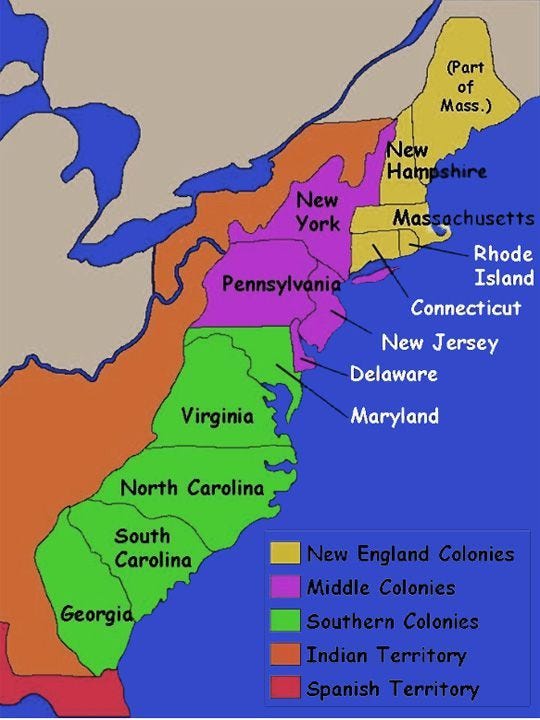
By 1640, Maryland became the first colony to institutionalize slavery. Landowners turned to African slaves as a more profitable and ever-renewable source of labor due to their lifelong servitude and the ability to pass their status onto their children. Thus, the shift from indentured servants to racial slavery had begun.
Until the late 18th century, indentured servitude was common in America and a common way for Europeans to immigrate to the colonies. In the 19th century, the system was also used to exploit Asian immigrants, particularly Chinese laborers, who were brought to America to construct roads and railway systems under harsh conditions.
Many young children were taken (stolen) from the London streets to the American colonies as indentured servants, mostly to Virginia to work as forced apprentices. Around 500,000 indentured laborers were transferred to the Caribbean between 1837 and 1917, when the practice was officially abolished.
Indentured servitude, while initially a means of opportunity for many, often resulted in exploitation and hardship, leaving a lasting impact on the labor history of America.
Today modern instances of practices that resemble indentured servitude, often referred to as "involuntary servitude" or "forced labor." These cases can occur in various forms, including human trafficking and exploitative labor practices.
Some examples include:
Human Trafficking:
Victims of human trafficking are often forced into labor under conditions that resemble indentured servitude. They may be coerced into working to pay off debts, with their freedom restricted and their movements controlled
Prison Labor:
In the United States, prison labor has been criticized as a form of modern-day slavery. Incarcerated individuals are often required to work for little or no pay, and this practice is sometimes justified under the 13th Amendment, which allows involuntary servitude as a punishment for crime
Exploitation of Migrant Workers:
Migrant workers, particularly those in agriculture, construction, and domestic work, can be subjected to exploitative conditions that mirror indentured servitude. They may be forced to work long hours for low pay, with their passports confiscated and their freedom restricted
Efforts are ongoing to address these issues through legislation and advocacy. For example, several states in the U.S. have recently voted to remove language from their constitutions that permits slavery and involuntary servitude as a punishment for crime.
Nine states still have language in their constitutions that permits slavery and involuntary servitude as punishment for a crime. These states include:
Alabama
Arkansas
California
Georgia
Indiana
Iowa
Kansas
Minnesota
Ohio
Indentured servitude played a pivotal role in shaping the labor systems of early America. While it provided a means for many Europeans to immigrate to the New World, it often resulted in their exploitation and hardship. The transition from indentured servitude to racial slavery marked a significant shift in the labor dynamics that was driven by economic motivations.
The legacy of indentured servitude, alongside slavery, has left an indelible mark on the history of labor and immigration in America. Understanding this history is crucial in acknowledging the complexities and injustices of the past, and it serves as a reminder of the importance of advocating for fair and humane labor practices today.
CellyBlue - I Do Know This!

There is so much history in your article that we NEVER learned in grade school. All I remember is the concept of Indenture being a good thing to help folks get to the new world. Slavery? Just the way it was back then. I think I started to pay attention in eighth grade. The Civil War was a turning point for me. But then the deep history had yet to be shared. Thanks for writing !
At least two of my ancestors came as indentured servants. One was kidnapped from Ireland as a boy.